
 >
>The Roman Odeon of Kos is one of the most significant archaeological landmarks on the island and offers a fascinating glimpse into the Roman era. Located just a short distance from the ancient Agora in Kos Town, the Odeon was built in the 2nd century AD, during the Roman period, and served as a center for entertainment and social gatherings.
History and Function:
The Roman Odeon was originally a covered building designed for musical performances, poetry readings, and political events. Unlike the larger open-air theaters of ancient Greece, which were used for dramatic performances, Odeons were smaller, more intimate spaces meant for more refined, artistic gatherings. It was also used for political meetings and speeches, making it a place of cultural and civic importance.
Architecture:
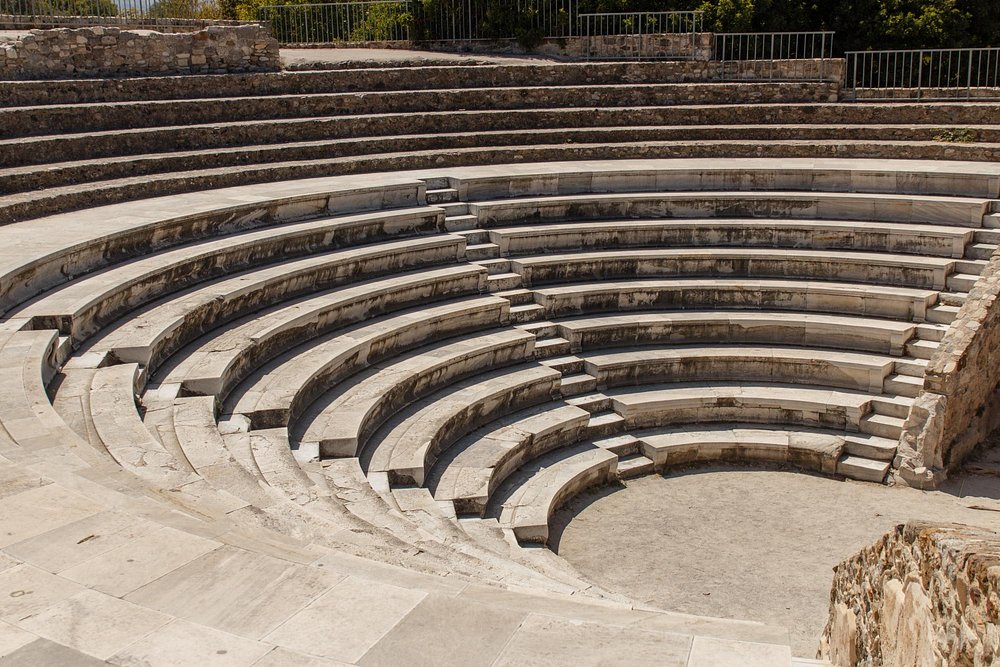
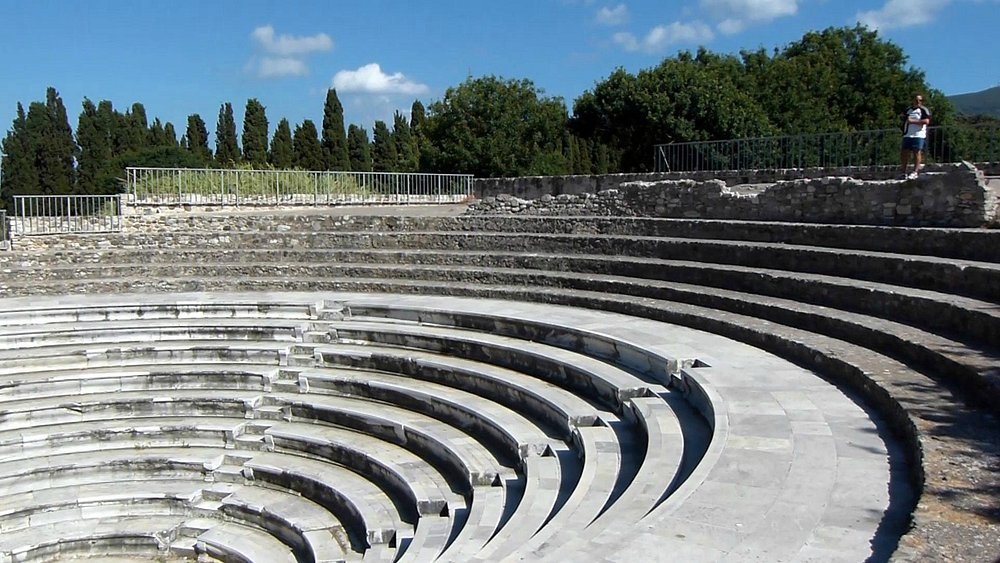
The Odeon is a classical example of Roman architectural ingenuity. It is a small amphitheater-like structure with seating arranged in a semi-circle around the stage area, known as the orchestra.
- Cavea (Seating area): The seating area, or cavea, had 14 rows of marble seats. The lower rows, made of marble, were reserved for the elite or important citizens, while the upper rows, made of less expensive materials, were for the general public. In its original form, it could accommodate approximately 750 to 1,000 people.
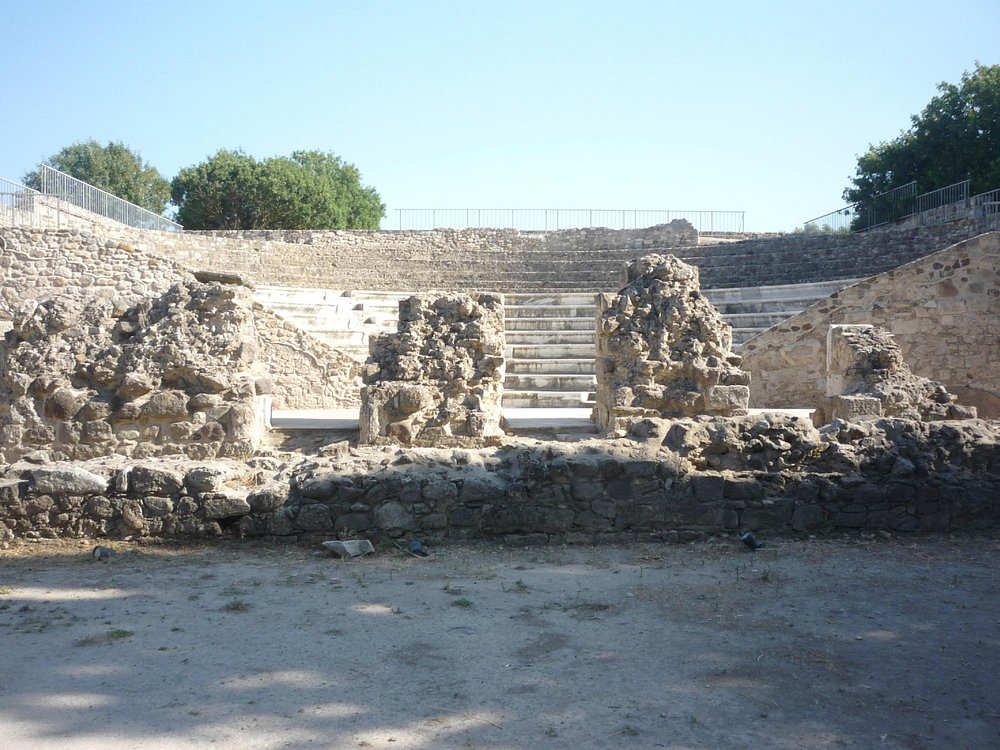
- Orchestra and Stage: The orchestra, the flat area at the front of the seating, was used for performances. The stage (or pulpitum) was slightly raised, and behind it were the remains of the scaenae frons (stage backdrop), which likely had ornate columns and decorations typical of Roman Odeons.
- Architecture and Materials: The Odeon was primarily built of marble and brick, typical of Roman structures of the time. It had a roof, though today only a few parts of the structure are preserved. Some restoration work has been done to protect and maintain the site, making it one of the best-preserved Roman monuments on the island.
Restoration and Preservation:
The Roman Odeon was rediscovered in the early 20th century during the Italian occupation of the Dodecanese. Excavations revealed a largely intact structure, and some areas have been restored to their former glory. Today, the site is well-preserved, allowing visitors to experience the grandeur of the Roman period.
Significance:
The Odeon stands as a testament to the influence of Roman culture on the island of Kos. It highlights the importance of public entertainment and civic life during the Roman era, as well as the island’s connection to the broader Roman Empire. Kos was an important regional center during the Roman period, and the Odeon is one of the many structures that demonstrate this.
Visiting the Roman Odeon:
- Location: The Roman Odeon is located close to the ancient Agora of Kos, in Kos Town, within easy walking distance of other significant archaeological sites like the Casa Romana and the Western Excavations.
- Entrance Fee: Admission is typically included in a general ticket for the archaeological sites of Kos, or it may have a small separate fee.
- Experience: Visitors can explore the seating area, the orchestra, and the partially restored stage. Some modern events and performances may also take place at the site, bringing it back to life in a contemporary context.
The Roman Odeon of Kos offers a wonderful opportunity to explore ancient Roman culture and architecture and is a must-visit for history buffs exploring the island’s rich past.
Location
Similar Listings
 Add Review
 Read More Reviews
Add Review
Leave a Reply
Added By admin

Dede Thorpe
3 months agoI enjoyed this. A good way to spend up to 45 minutes. It's a small amphitheatre type ruin. Beautiful on the outside but the magic is on the inside. We were able to see the tunnels and the rooms under the theatre and there were small bats on the ceilings that were flying around. A very nice unexpected feature. Lots of information on the boards in each chamber/room about the Odeon.
Ameera Marshall
3 months agoA fascinating piece of history right in the heart of Kos. Standing in the Roman Odeon and imagining the performances, gatherings and conversations that took place here nearly 2,000 years ago is an incredible experience. The site is beautifully preserved, easy to explore, and offers a unique glimpse into the island's rich Roman heritage. The information boards are helpful, and the atmosphere is peaceful despite being close to the town centre. A must-visit for anyone interested in history, archaeology or simply appreciating the remarkable achievements of ancient civilisations. Amazing that a place with so much history can still be enjoyed today.
ali gunter
3 months agoVery impressive ancient Roman site with well-preserved architecture and a fascinating historical atmosphere. Walking through the old amphitheater gives a real feeling of the island’s rich history and cultural heritage. The site is clean, peaceful, and great for exploring and taking photos. A must-visit place in Kos for anyone interested in archaeology, Roman history, and ancient landmarks. Highly recommended during a Kos Island tour.
Badvoc Zero
4 months agoAn interesting walk around the old ruins. Free access but no info available. Sadly abut overgrown but still worth exploring in it's more 'natural' state
Neil Fleming
3 months agoLovely place to visit, don't miss the underneath area accessed from the side of the ocean. Some good information boards in the underground area and pretty well preserved. Don't miss the bats hanging from the ceiling in one of the last rooms. All free as well